Brand direction
Get clear on who you’re for, what makes you different and what your identity needs to communicate. Those decisions give the design a purpose and help us choose a direction together.
Logos, visual identities, packaging and print for businesses in Dorset and Somerset. We work with new ventures and existing brands from our Sherborne studio.
From our studio in Sherborne, we work with independent businesses across Dorset, Somerset and the UK. We create new identities and refresh existing branding across the formats agreed in your brief.
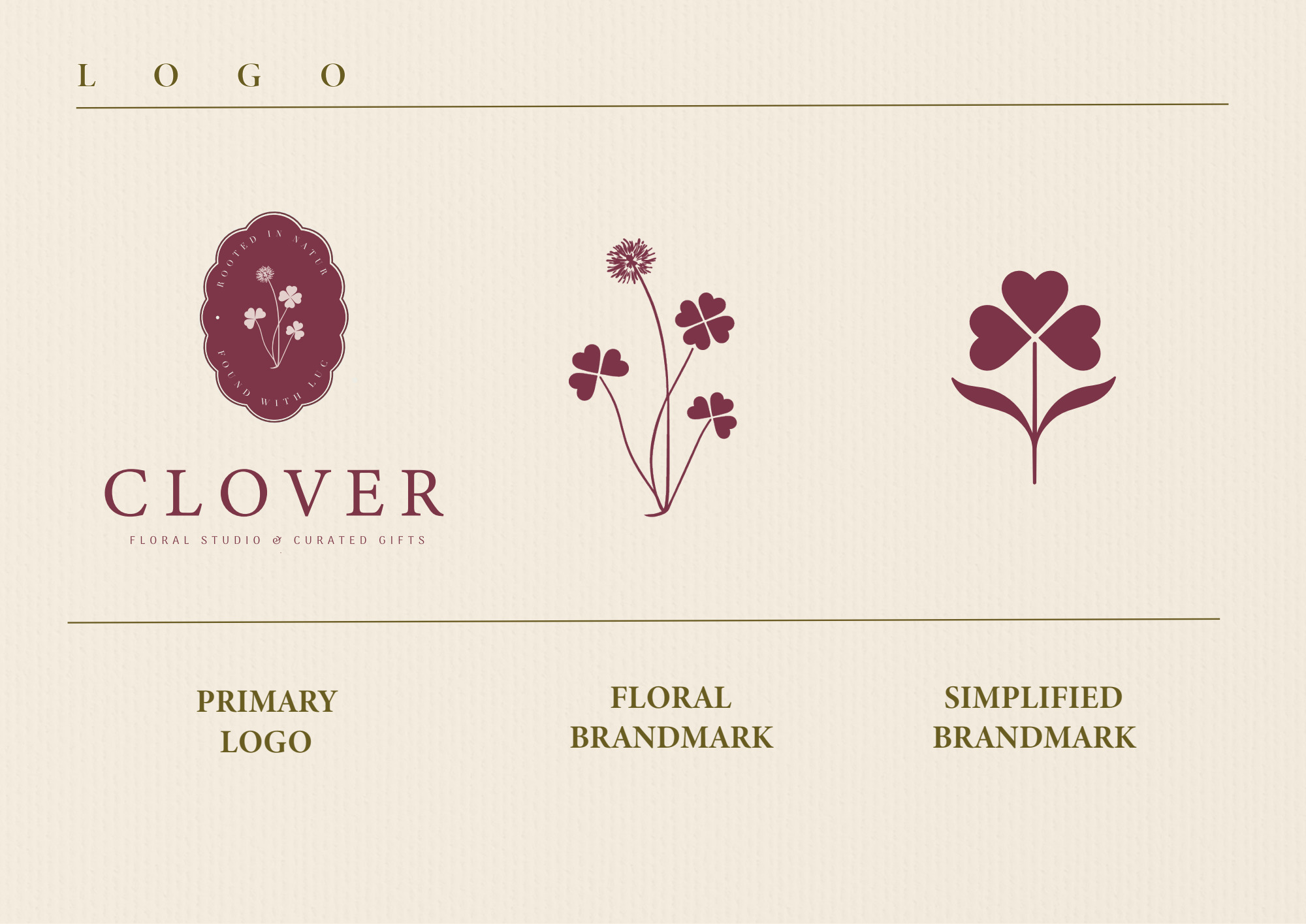
Explore the botanical identity and print designs for Clover Floral Studio, or the visual identity refresh for Printasleeve.
Start with what your business needs. A focused logo project, a more consistent visual identity or a complete system across digital, packaging and print. Read our guide to choosing between a logo and a wider brand identity.
Get clear on who you’re for, what makes you different and what your identity needs to communicate. Those decisions give the design a purpose and help us choose a direction together.
A distinctive mark, supported by colour, typography and the visual elements that hold everything together. We develop the variations you need for real use, from a small profile image to a shopfront.
Labels, boxes, stationery and print artwork designed to work in the real world. We consider the product range, format and production requirements as part of the brief.
Original illustration can bring character to a brand. We can also carry the identity into your website, social content, signage and other agreed applications, so it feels consistent wherever people meet you.
Two different briefs, with the design decisions and finished work explained.

You may have a strong logo but an inconsistent look around it. Or a business that has evolved beyond its original identity. We’ll look at what’s working before deciding how much needs to change.
Sometimes a set of guidelines and a few thoughtful improvements are enough. A wider rebrand is an option when the business needs a clearer change of direction.
Talk through my brandWe show design directions in context, so you can see how an identity could work on the things your customers actually encounter. That might be a label, a website or a piece of print.
The final scope can include a practical set of guidelines and the agreed print, web and vector files. We explain how to use them, so keeping things consistent feels manageable.
Copyright assignment for our original commissioned artwork is confirmed in writing. We also explain any separate font or third-party asset licences that apply.
A logo refresh and a full identity with packaging are different briefs. Explore broad branding ranges in our price guide, then we’ll tailor the scope and quote around your priorities.
Applications, product ranges, illustration and production requirements all shape the cost. Any printing or external production costs are made clear in the proposal.
Our prices include VAT. The guide is indicative; the final scope and quote are agreed together.
You work directly with the people designing your brand. We explain the thinking, listen to your feedback and keep the next decision clear.
Most projects take around four to eight weeks. Packaging ranges and wider rollouts may take longer; we agree timing around the brief and approvals.
Explore our workExplore your audience, offer and ambitions, alongside anything you already have.
See considered design routes applied to relevant formats, with the thinking behind them.
Develop the chosen direction and the variations or applications agreed in the scope.
Receive the agreed files and guidance, ready to put your identity to work.
We can apply the identity to your website, photography, content and advertising, with the next work agreed in your brief.
Often, yes. If the logo still fits but the wider look is inconsistent, colour, typography and guidelines may be the right starting point. We’ll review what you have before recommending a change.
It depends on the scope and the applications you need. Our branding and marketing price guide gives broad indications, with VAT included. We’ll confirm a bespoke quote after discussing your brief.
Yes. We work on labels, packaging, print artwork and dielines. Tell us about the product range, supplier and required formats so we can plan the design around production.
We confirm copyright assignment for original commissioned work in writing and hand over the agreed files. Fonts, stock assets or other third-party materials may have separate licence terms, which we explain.
Most projects take around four to eight weeks, depending on scope and approvals. A larger packaging range or rollout can take longer. We agree the schedule at the start.
Naming and trademark legal work are outside our service. We can design around your chosen name; specialist advice may be needed for name clearance or registration.
No. We work with new ventures and established businesses, including those that want to preserve a familiar identity while making it more consistent or relevant.
Yes. We work across Dorset and Somerset, including Yeovil, Dorchester, Shaftesbury, Bruton and Castle Cary, and remotely with clients across the UK.
Ask about prices, timing or working with the studio. We’ll look for an existing FAQ answer and link to its page.
Searches published FAQ answers in your browser.
We couldn’t find a close match in the FAQs. Send us your question and we can talk it through.